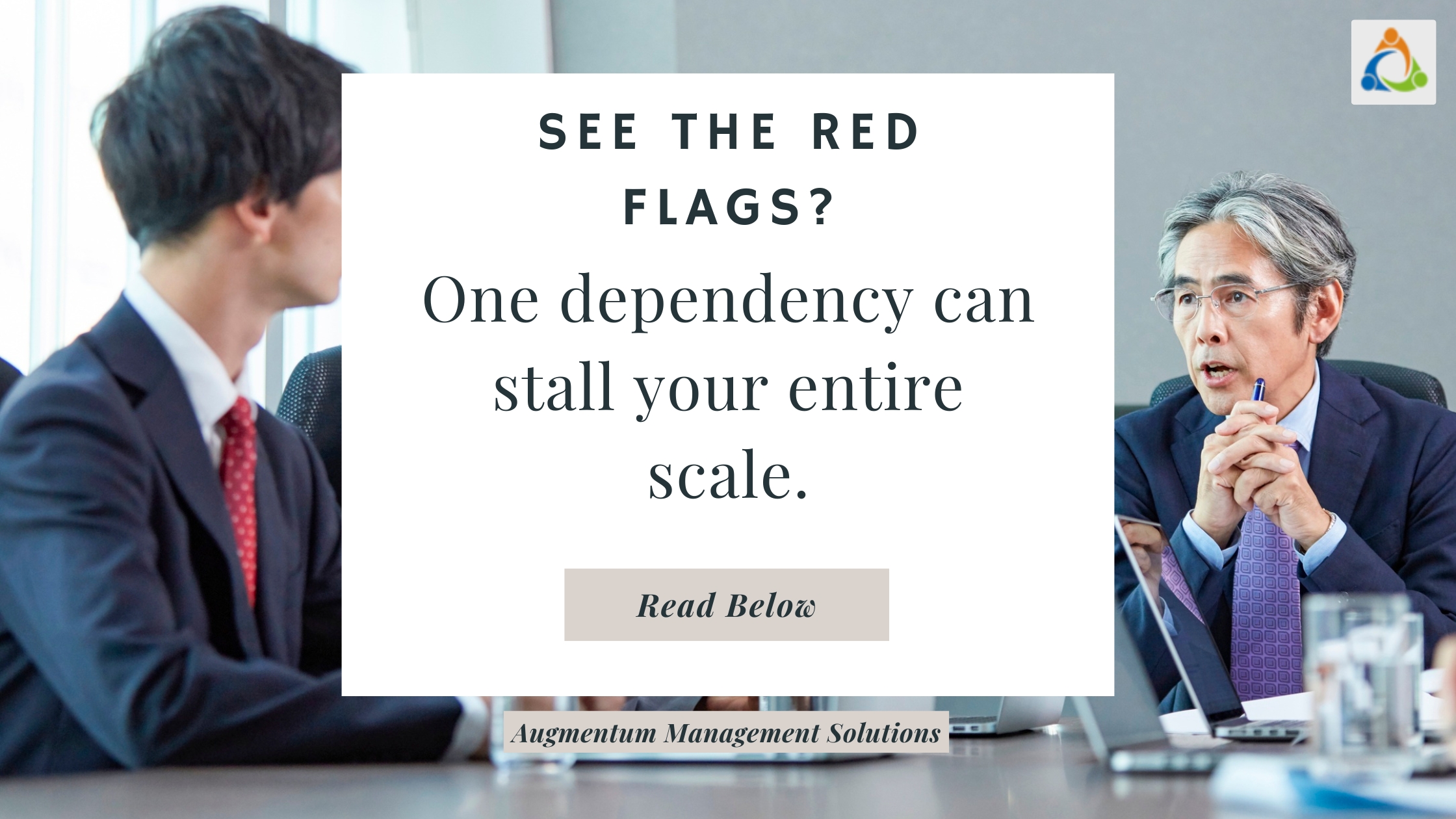
Growth in SMEs often looks impressive from the outside – more clients, bigger revenues, expanding teams. Yet behind the numbers, hidden cracks can quietly block scale. These cracks aren’t about markets or competition. They are about dependency and bottlenecks inside the business.
When too much authority, knowledge, or decision-making rests with a few individuals, continuity and resilience are at risk. What looks like control in the short term often becomes the biggest vulnerability in the long run.
The reality is simple: dependency is not strength – it is fragility disguised as stability. And the warning signs show up earlier than most leaders admit.
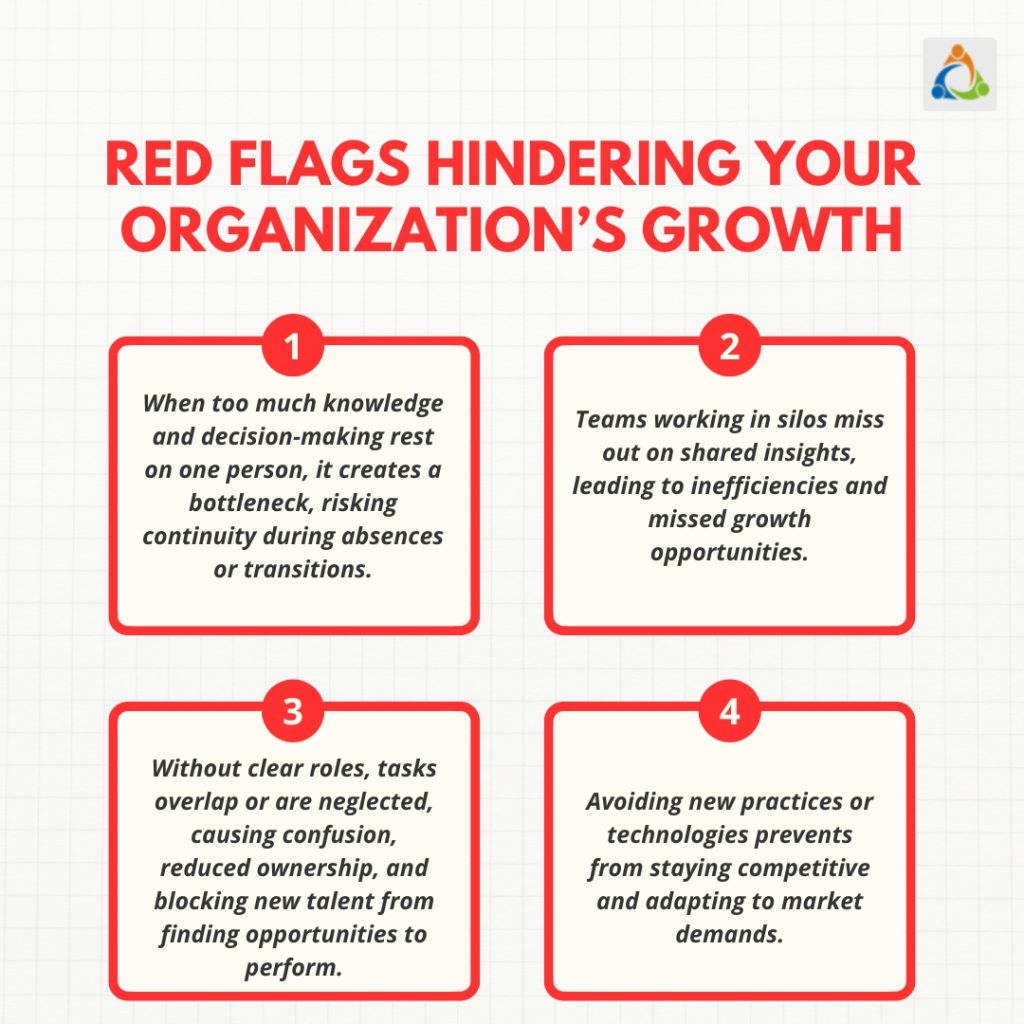
The Silent Red Flags That Signal Trouble:
- Bottlenecks Around Individuals:
When critical knowledge and decision-making rest with one person, operations slow down. Absences or transitions create disruptions that ripple across the business. What feels like control is actually a ticking risk. - Siloed Teams Missing Opportunities:
When teams work in isolation, insights don’t travel. Growth opportunities are lost, inefficiencies multiply, and decisions are made without the full picture. Silos don’t just reduce collaboration; they reduce competitiveness. - Unclear Roles Causing Overlaps:
Without defined roles, tasks are duplicated or neglected. Accountability weakens, ownership blurs, and new talent is blocked from performing. Role confusion is one of the fastest ways to demotivate a team. - Resistance to New Practices:
Avoiding fresh workflows or new technologies might feel safe, but it erodes competitiveness. Market demands move faster than internal comfort zones. Firms that delay adaptation often lose relevance before they notice.
The Real Cost of Ignoring These Red Flags
SMEs that allow these warning signs to persist face both visible and invisible damage:
- Burnout at mid-levels, where firefighting replaces strategy.
- Founders stuck in routine approvals instead of growth planning.
- Constant rework, errors, and coordination chaos.
- Silent attrition, where capable employees disengage or leave.
- Reputational risks with clients who experience inconsistency.
What begins as “control” quickly turns into fragility—slowing decisions, frustrating teams, and blocking scale.
Breaking Dependency: Where Leaders Must Act
Avoiding these pitfalls doesn’t require a complete overhaul. It requires discipline in four areas:
- Institutionalize systems: Move knowledge from individuals to documented workflows.
- Define roles and ownership: Give clarity so responsibility is distributed, not concentrated.
- Encourage collaboration: Break silos with cross-functional projects and shared goals.
- Adopt new practices early: Build adaptability into culture, not just technology.
When leaders act early, they replace fragility with resilience. The shift from dependency to systems is what converts growth into sustainable scale.
SMEs don’t fail because they lack growth. They falter because growth outpaces operations. Dependency is the red flag that leaders cannot afford to ignore.
By addressing bottlenecks, breaking silos, clarifying roles, and embracing adaptability, organizations move from fragile to future-ready. Growth becomes not just bigger – but stronger, scalable, and sustainable.