Progress often looks busy. Targets are set, meetings happen, reports get made and yet, months later, results barely shift.
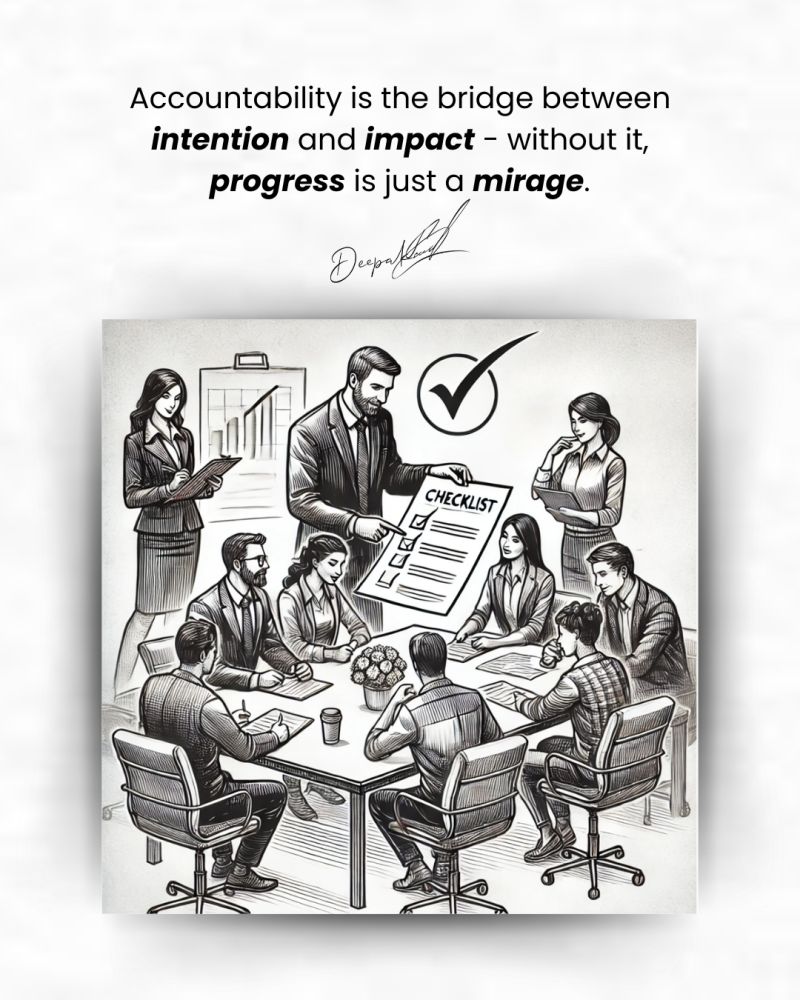
What went wrong usually is not effort. Not even vision. It’s the missing bridge between intention and impact – Accountability.
In fast-growing SMEs, this gap is easy to miss because movement often masquerades as momentum. People appear engaged, but the outcomes stay flat. Everyone believes the system is working, until the cracks begin to show – missed deadlines, duplicated work, repeated errors, and teams slowly losing ownership.
That’s when leaders realize something uncomfortable: without accountability, progress is just a mirage.
From Illusion to Impact: Embedding Accountability Where It Matters Most
Accountability isn’t about policing performance. It’s about clarity, trust, and ownership – three pillars that determine how far a business can truly go. Yet, in most organizations, especially SMEs, accountability breaks at the top long before it fails at the bottom.
Leaders often assume accountability is a team issue – a matter of people not meeting expectations.
But real accountability begins with the question: “Am I creating the environment where accountability can thrive?”
1. The Hidden Cost of Missing Accountability:
A culture without accountability doesn’t just slow progress – it quietly drains time, money, and talent. What’s more dangerous is how it feels invisible until it’s too late.
Tangible costs include:
- Missed deadlines that push opportunities further away.
- Escalating costs from repeating the same mistakes.
- Lost revenue from dissatisfied clients and unfulfilled promises.
Intangible costs cut deeper:
- Trust erodes when ownership is unclear.
- Teams disengage because their efforts don’t translate into results.
- Blame replaces collaboration, innovation fades, and reputation slips.
The problem isn’t usually capability – it’s clarity. When expectations aren’t defined, responsibility becomes a moving target. Everyone’s doing something, but no one owns the outcome.
2. Accountability Starts Where Leadership Does:
True accountability cascades downward only when it’s practiced upward. If leaders don’t hold themselves accountable, the message that travels through the organization is subtle but powerful: “Accountability is for others.”
It’s why some teams work hard but drift aimlessly – they mirror what they see, not what they hear. Leaders who model accountability build trust faster because they convert intentions into action and direction into discipline.
Start with reflection:
- Do decisions come with ownership?
- Are outcomes reviewed or just reported?
- Do teams see leaders take responsibility for misses as much as they take credit for wins?
When leadership displays that balance, accountability becomes not a demand but a shared value.
3. Turning Accountability into a System:
Accountability fails when it’s left to personality; it thrives when it’s built into process. Here’s how to make it structural – not situational:
- Define roles and ownership clearly. Every task must have one accountable person not five contributors and zero owners.
- Create transparent review loops. Metrics shouldn’t exist just in dashboards but in dialogues that connect people to outcomes.
- Offer constructive feedback. The goal isn’t to control but to correct with clarity and empathy.
- Enforce consistency. Accountability loses credibility when exceptions become the rule.
- Celebrate it. Recognize when someone owns an outcome and follows through. It signals what the culture truly values.
These steps aren’t checkboxes – they’re rituals of reliability that strengthen how teams think, decide, and deliver.
4. The Ripple Effect: From Individual to Institutional Accountability:
Once accountability becomes embedded, the organization starts to change shape. Teams stop waiting for permission and start driving outcomes. Decision-making speeds up because clarity replaces confusion. And performance reviews stop being about excuses – they become conversations about growth.
For SMEs, this shift can be transformational. When every role has defined accountability, you’re not just improving execution; you’re building a system that sustains progress, even when leadership isn’t in the room.
This is where the bridge forms: between vision and results, between leadership intent and organizational impact.
5. The Real Marker of Growth:
The truest test of accountability isn’t how well teams follow directions; it’s how willingly they own the result. And that willingness stems from what they observe daily – leaders who are consistent, transparent, and fair.
When accountability becomes part of the operating DNA, performance doesn’t depend on motivation; it flows from structure. That’s when businesses stop firefighting and start forecasting.
Because accountability doesn’t just drive efficiency – it drives credibility. It builds the kind of trust that outlasts quarterly numbers and market swings.
Every SME leader wants speed. But speed without accountability only accelerates confusion. The bridge between where you are and where you want to be isn’t just strategy or talent – it’s the discipline of owning outcomes.
When that bridge strengthens, progress stops being a mirage. It becomes measurable, repeatable, and real.