Transformation doesn’t start in boardrooms. It starts with people.
Companies often announce bold goals, restructure teams, and draft new strategies, yet progress hits a wall. The reason is simple: transformation isn’t about what changes on paper, it’s about what shifts in people. And unless leaders drive that shift themselves, no amount of reports or reorganizations will deliver lasting results.
Nearly 70% of transformation initiatives fail, with lack of employee buy-in cited as the top reason. CEOs often underestimate how deeply culture, behaviors, and daily execution determine success. That gap between illusion and execution is what separates organizations that thrive from those that stall.
Organizations often confuse activity with progress. But transformation isn’t about announcing change; it’s about embedding it into how people think, act, and deliver every day. The real challenge for CEOs is bridging the gap between ambition and execution – between what looks good on paper and what actually drives results.
The Illusion of Transformation: Why Strategy Alone Falls Short
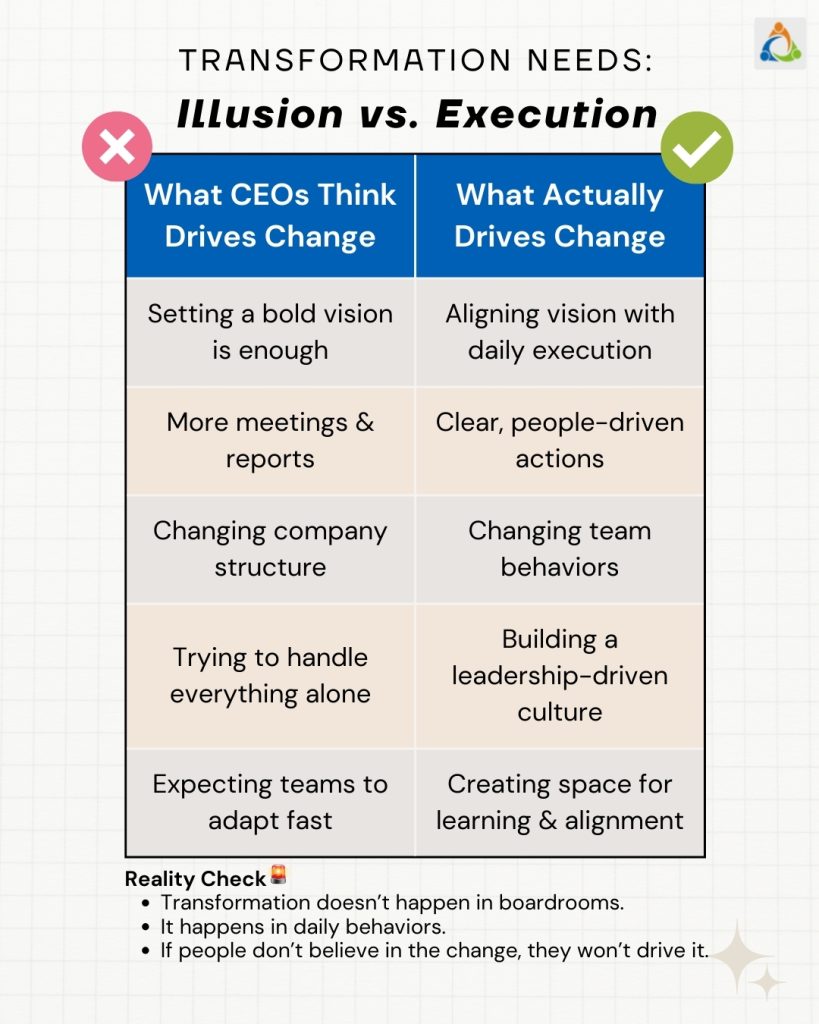
CEOs often believe that setting a bold vision is enough. They assume more meetings, reporting frameworks, or structural changes will trigger transformation. But these moves rarely address the root issue: people’s mindsets.
Organizations announce changes, but employees resist. Structures evolve, but behaviors stay the same. Decisions are made, but teams don’t align. The illusion of transformation rests on the belief that systems alone can drive change. In reality, they cannot.
This is where leaders must go beyond directives and recognize that transformation is not an event, it’s a shift in how people think and act every day.
Aligning Vision with Daily Execution
A vision without execution is just words. True transformation happens when strategy is broken down into clear, people-driven actions that teams can connect with.
For example, Rolls-Royce didn’t just update its corporate structure to stay afloat; it transformed its culture, embedding innovation into daily decision-making. This alignment of strategy with action is what created resilience and long-term growth.
Business transformation consulting often begins here – translating high-level goals into day-to-day priorities that everyone can understand and act on.
Driving Alignment, Not Just Directives
Top-down orders may create compliance, but they don’t create commitment. Sustainable change requires shared vision – a sense that everyone, from leadership to frontline teams, is moving in the same direction.
When leaders focus on alignment instead of directives, transformation accelerates. Employees no longer feel like change is happening to them, but with them. That shift in ownership is where momentum begins.
Building Adaptability Into Culture
Processes can be updated, but if people are unwilling or unable to adapt, transformation will stall. CEOs who succeed in driving change cultivate adaptability as a core value.
This means rewarding experimentation, tolerating smart failures, and enabling teams to learn fast. A leadership-driven culture of adaptability ensures that transformation doesn’t collapse at the first sign of resistance.
Communication: The Lifeline of Change
One of the most common reasons transformations fail is not resistance, but misinformation. Assumptions spread faster than clarity, and rumors undermine trust.
Effective CEOs establish structured communication channels validated by change leaders. They make sure employees know not only what is changing, but why it matters. Transparency builds belief, and belief drives action.
Empowering Leaders at Every Level
Transformation succeeds when leadership is distributed. Relying solely on the CEO or a small leadership team creates bottlenecks. Instead, organizations must empower decision-makers at every level.
By equipping managers with the tools, authority, and clarity they need, CEOs ensure that transformation is not concentrated at the top but cascades through the entire organization.
Shifting Behaviors Before Systems
It’s tempting to focus on implementing new technologies, structures, or models. But without behavioral change, these systems collapse.
Consider digital transformation efforts where companies invest heavily in new platforms, only to see adoption rates plummet. The technology wasn’t the issue – behavior was. Old habits undermine new systems unless leaders shift how people work first.
Creating a Culture Where Change Feels Natural
The ultimate marker of transformation is not compliance, but culture. When employees feel that change is natural – embedded in how the organization thinks, acts, and operates – it no longer feels forced.
Creating such a culture is a long-term effort, but it’s the only way transformation sustains itself. Leaders who treat transformation as a cultural journey, not a one-time project, unlock true reinvention.
The hard truth is that organizations don’t change – people do. And if people don’t believe in the change, they won’t drive it.
That’s why transformation is not just a matter of new strategies, processes, or structures. It’s about leading people through uncertainty, aligning vision with execution, and making change part of everyday culture.
For CEOs, the question isn’t whether to manage change or to make people want to change. It’s whether they are willing to lead by example, shift behaviors before systems, and turn transformation from a boardroom strategy into a lived reality.
Because in the end, the companies that thrive aren’t the ones that announce transformation. They are the ones that live it, every day, through their people.