
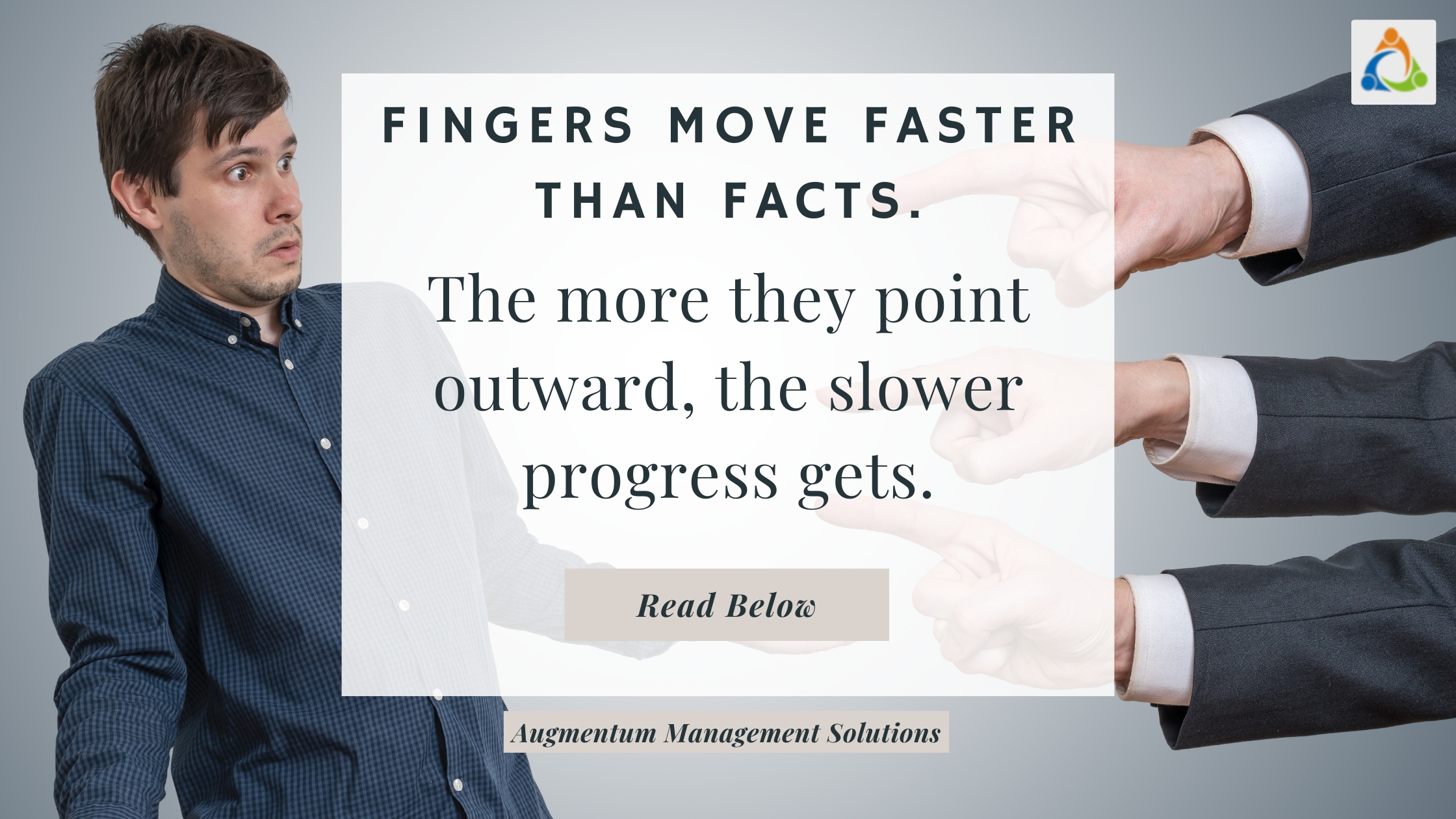
Blame culture is the silent assassin of trust and progress.
It doesn’t announce itself with conflict or chaos – it hides in excuses, delayed decisions, and the subtle fear that punishes mistakes more than it rewards honesty. In many organizations, leaders often underestimate how quickly this culture spreads. What begins as one person avoiding responsibility can quietly evolve into a system where accountability disappears, innovation stalls, and every meeting becomes an exercise in defense rather than collaboration.
That’s the paradox of blame culture – it gives the illusion of order while quietly eroding the foundations of progress.
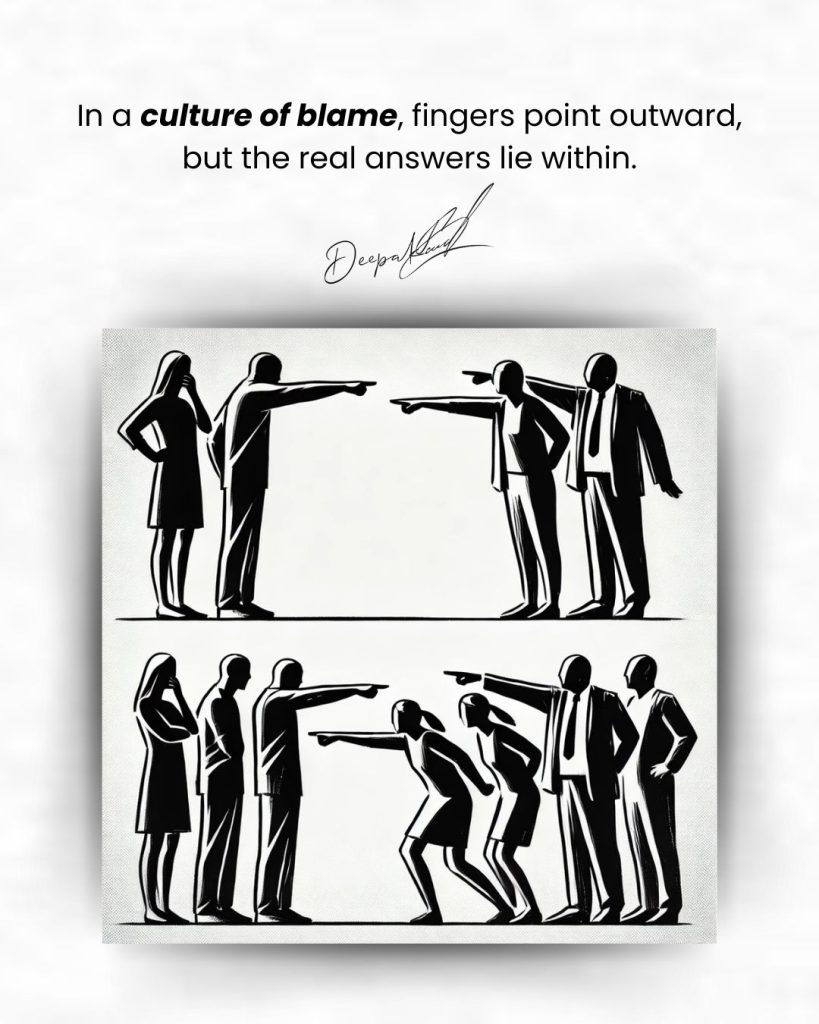
The Cause: How Blame Culture Creeps In
Blame culture rarely starts with bad intentions. It grows out of uncertainty, leadership blind spots, and the misplaced belief that assigning fault equals maintaining control.
In SMEs, this often happens when leadership and structure evolve faster than culture. The organization grows, but communication systems don’t. Roles overlap, decisions blur, and soon, accountability becomes everyone’s and no one’s responsibility.
Here’s where it begins:
- Leadership deflection. When senior leaders model defensiveness instead of ownership, blame trickles down. People learn to protect themselves, not the organization.
- Poor structure and unclear roles. When teams don’t know who owns what, accountability turns into confusion & confusion into conflict.
- Opaque systems. Without transparent feedback loops, people operate in silos. It becomes easier to say “it wasn’t my fault” than “let’s fix it together.”
- Family dynamics in business. In family-led SMEs, personal relationships can complicate professional accountability. Emotional loyalties often overshadow systemic fairness.
The result is this: a culture where energy is spent avoiding mistakes rather than learning from them.
The Consequence: How Blame Destroys Progress
The cost of blame isn’t visible in spreadsheets – it’s reflected in disengagement, hesitation, and mistrust. It silently drains performance and creativity while keeping everyone busy but unproductive.
Fear replaces curiosity:
Teams stop experimenting because mistakes are punished, not analyzed. The organization loses its innovative edge, choosing safety over progress.
Morale collapses:
People who constantly feel accused stop contributing beyond the minimum. Collaboration becomes mechanical, motivation fades, and attrition quietly rises.
Accountability evaporates:
When blame dominates the air, no one steps forward. Everyone steps back. Decisions slow down because every choice feels risky, and initiative becomes rare.
Trust dissolves:
Once trust breaks, it’s not the processes that fail – it’s the people. Teams begin to assume the worst about each other’s intentions. Silos harden, and leaders spend more time mediating than mentoring.
And finally, progress stalls. Decisions get delayed, projects drag on, and meetings revolve around what went wrong rather than what can be done better. It’s a slow organizational suffocation.
Blame doesn’t just harm performance – it rewires the company’s emotional DNA.
From Blame to Ownership: The Leadership Shift
The antidote to blame culture isn’t more control – it’s more trust. It begins not with policies, but with posture. Leaders must create an environment where accountability feels empowering, not punitive.
Here’s how organizations can shift from a culture of blame to a culture of ownership:
1. Make collaboration the default, not the exception.
Encourage collective problem-solving. When teams are guided to fix issues together, the focus shifts from who’s wrong to what’s next. The best solutions often emerge in shared responsibility, not solitary defense.
2. Build psychological safety.
According to research by Google’s Project Aristotle, psychological safety was the number one factor distinguishing high-performing teams. When employees feel safe to speak up, share mistakes, or challenge ideas, innovation flourishes naturally.
3. Adopt a no-blame policy.
This doesn’t mean avoiding accountability – it means redirecting it. Instead of asking “Who caused this?”, leaders should ask “What can we learn from this?” Over time, this mindset transforms fear into reflection.
4. Empower ownership through autonomy.
True accountability requires control. Give teams clear ownership of projects and decisions. When people see the direct link between their actions and outcomes, they stop avoiding responsibility and start embracing it.
5. Lead by example.
Change doesn’t cascade – it reflects. Leaders who openly own their mistakes and model transparency set a cultural precedent. As Deepak Mehta often emphasizes on LinkedIn, “Leaders who take responsibility invite their teams to do the same.”
The Deeper Truth: Accountability Over Authority
At its core, blame culture is a mirror. It reflects leadership’s comfort with vulnerability. Organizations that fear mistakes usually have leaders who fear imperfection. But the healthiest teams aren’t flawless – they’re fearless enough to admit flaws early and fix them together.
When leadership shifts from controlling outcomes to cultivating accountability, everything changes:
- Conversations become constructive.
- Teams feel safe taking initiative.
- Problems turn into learning loops, not performance traps.
And that’s the turning point – when fear exits, progress re-enters.
Blame may feel like discipline, but it’s actually delay. Every time an organization chooses to assign fault over finding solutions, it pushes growth one step further away.
Leadership maturity lies in transforming fear into feedback and conflict into clarity. Because in every organization, the moment leaders stop asking “Who’s at fault?” and start asking “What can we improve?” – that’s when true progress begins.
Blame slows progress. Ownership drives it.


